Perspectives: Fiscal Governance in the Age of Constraint and Distrust
The fiscal pressures OECD and partner governments face today are categorically different from those that shaped the last wave of public finance reforms.
Perspectives
Perspectives: Fiscal Reform Needs More Than Strong Finance Ministries
Writing for Inter Press Service, Warren Krafchik and Paolo de Renzo argue that the next phase of fiscal reform needs to move beyond an institution-by-institution approach and toward something more systemic.
Synthesis Paper
Synthesis Paper: Strengthening Fiscal Ecosystems for Accountability and Equity: Synthesis from case studies of Brazil, Indonesia, and South Africa.
Strengthening Fiscal Ecosystems for Accountability and Equity: Synthesis from case studies of Brazil, Indonesia, and South Africa
Case Studies
Case Studies: Strengthening Fiscal Ecosystems for Accountability and Equity: Synthesis from case studies of Brazil, Indonesia, and South Africa
Strengthening Fiscal Ecosystems for Accountability and Equity: Synthesis from case studies of Brazil, Indonesia, and South Africa
Case Studies
Case Studies: Strengthening the Fiscal Ecosystem in Brazil: Challenges and opportunities
This case study focuses on the period starting with Brazil’s return to democratic rule in
1988, as it adopted a new Constitution, and will analyze central government institutions
and processes, looking at efforts to reform and improve budgetary governance at the
federal level and covering the role of the three branches of government and other
relevant actors and stakeholders.
Case Studies
Case Studies: A Review of Indonesia’s Fiscal Ecosystem
Indonesia has experienced major fiscal governance reforms marked by the amendments to
the 1945 Constitution and the introduction of a package of financial laws that created a more
democratic approach to fiscal governance. However, despite notable progress in transparency
and the development of formal institutions, the fiscal ecosystem and associated practices have
been shaped by changing political and economic dynamics. The central argument in this paper
is that Indonesia’s fiscal ecosystem has been heavily influenced informal political practices that
have undermined formal oversight institutions and democratic accountability norms. This paper
explores the evolution fiscal ecosystem in the post-democratic reform era in three main periods
from 1998 to 2025. The discussion covers the political and economic context, key reforms,
fiscal performance, and the development of fiscal accountability actors. The empirical evidence
in this paper demonstrates how shifts in political configuration have direct implications for the
structure, credibility, and fiscal governance. Over the period, the interplay between political
elites and formal oversight institutions has fluctuated, revealing the dominance of informal
coalitions in shaping fiscal governance. This paper also identifies several opportunities and
future pathways available to strengthen the fiscal ecosystems.
Case Studies
Case Studies: The Evolution of South Africa’s fiscal ecosystem. 1996-2025
The adoption of the new Constitution in 1996 preceded a period of significant reform that
left South Africa as a global face of good fiscal institutions in the developing world. This
image would however be much tarnished as fiscal accountability weakened in subsequent
years, and the state became vulnerable to corruption. This paper draws on literature
and interviews with stakeholders to explore the importance of formal and informal
accountability relationships, the influence of political changes on fiscal accountability,
and the roles of various actors in establishing and defending, or impairing, an accountable
and equitable fiscal ecosystem. In conclusion, it offers lessons and recommendations
for enhancing transparency, equity, and accountability in the management of the public
finances.
Perspectives
Perspectives: Warren Krafchik, Economist and social entrepreneur. Speaking on how citizen engagement is central to building the public will for budget reforms. Empowering Public Understanding of Public Finances
Warren Krafchik, Economist and social entrepreneur.
Speaking on how citizen engagement is central to building the public will for budget reforms.
Empowering Public Understanding of Public Finances
Perspectives
Perspectives: Citizen engagement: now a strategic necessity
When the public understands the budget and can engage with the process meaningfully, it becomes a strategic capability that makes budgeting more legitimate, realistic, and effective.
Perspectives
Perspectives: From Institutions to Ecosystems: Notes from a recent dialogue to Strengthen Fiscal Accountability and Equity
If you work anywhere near public finance, you will be familiar with a paradox: Ministries of finance are stronger. Fiscal transparency has improved. Supreme Audit Institutions (SAIs) are stepping up. Civil society and the media are more engaged. And yet the hardest outcomes – systemic shifts in fiscal accountability and equity - remain elusive
Perspectives
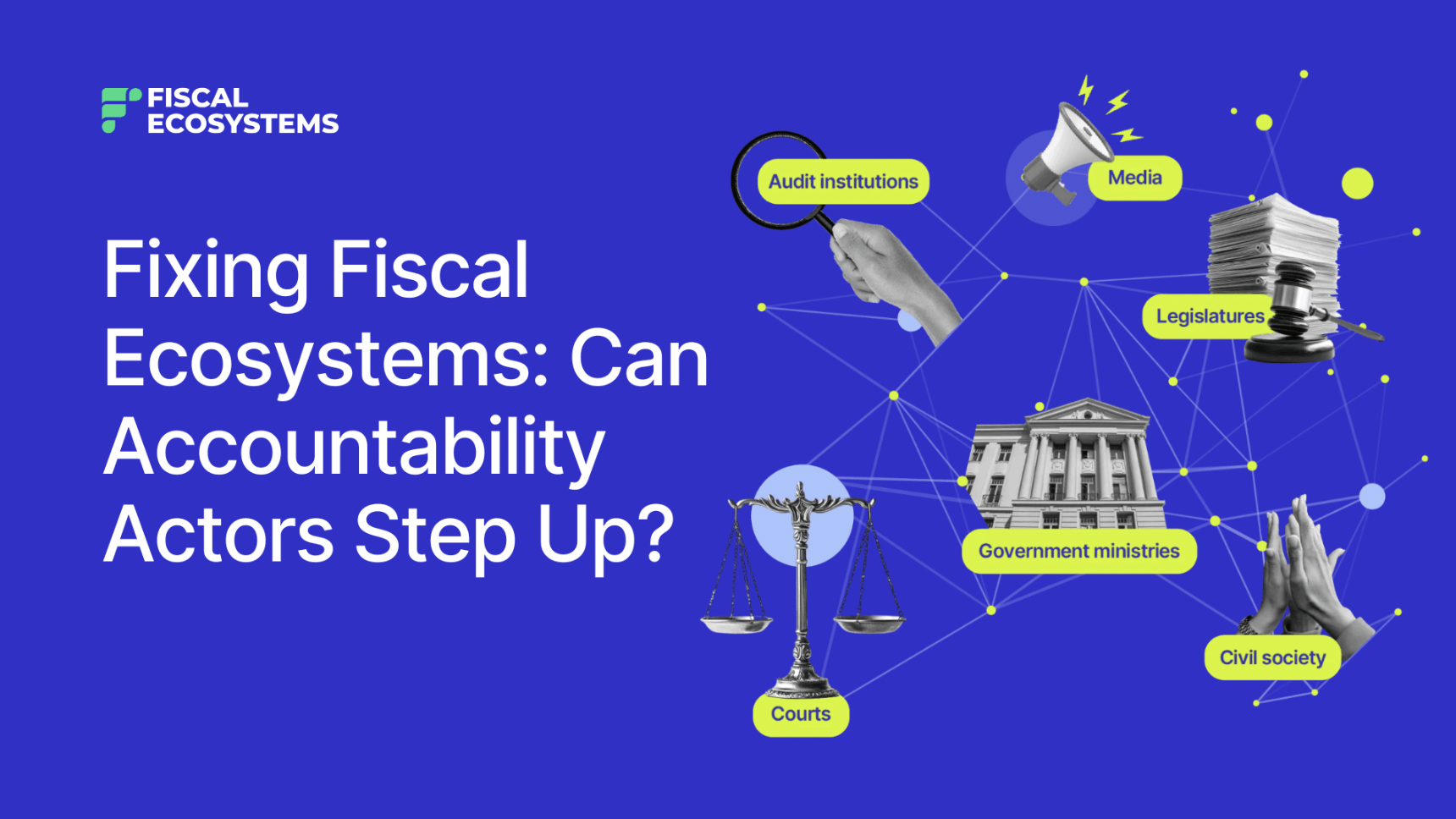
Perspectives: Fixing Fiscal Ecosystems: Can Accountability Actors Step Up?
Across much of the world, fiscal oversight is more pantomime than power—rarely shifting real decisions or resource flows.
Perspectives
Perspectives: Re-thinking Fiscal Governance: Introducing the “Strengthening Fiscal Ecosystems” Project
In a world where democracy is under strain and inequality is on the rise, how governments raise and spend public resources is more than a technical matter – it is a political act. One with real consequences for inclusion, equity and public trust.